Cinnamon holds a quiet place in most kitchens: it deepens a braised dish, warms an apple pie, and crowns a winter mulled wine. Yet the moment someone says "cinnamon lowers blood sugar" or calls it a superfood, the debate begins. Is it an ordinary spice, or an overlooked natural remedy? This article looks at cinnamon through three lenses — botany, traditional Chinese medicine, and modern research — and tries to settle it.
What Is Cinnamon?
Cinnamon is the dried inner bark of Cinnamomum cassia or Ceylon cinnamon (Cinnamomum verum), harvested, dried, and curled into the familiar sticks. It is native to Sri Lanka, southern China, and Southeast Asia, and it is one of the oldest spices in the world — at times valued above gold and among the commodities that drove the Age of Exploration.
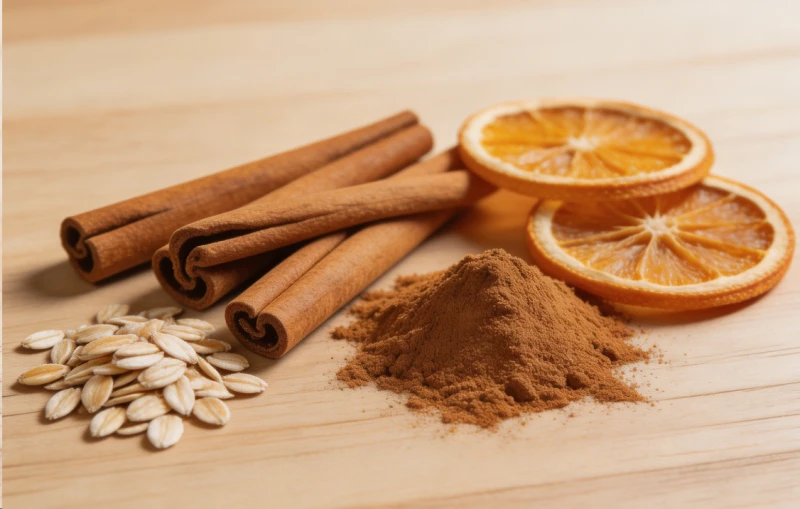
What makes it special is that it lives on two separate tracks at once: in the kitchen it adds aroma and lifts dishes, while in the pharmacy it is a warming herb for dispelling cold. That dual role — at home both at the table and in the medicine cabinet — is the classic example of food and medicine sharing one source.
What Traditional Chinese Medicine Says
In TCM, cinnamon (rou gui) is strongly warming, pungent and sweet, and enters the kidney, spleen, heart, and liver channels. Its core actions are tonifying the fire of life, dispelling cold and relieving pain, and warming the channels — in short, it "warms the body."
It is commonly used for:
- Yang deficiency with cold: cold hands and feet, cold aching lower back and knees, people who crave warmth.
- Spleen-stomach cold: abdominal pain and loose stools after cold food, poor appetite.
- Cold stagnation with blood stasis: cold-type menstrual pain, or aching after sprains.
- Guiding fire back to its origin: a classic ingredient in formulas for "heat above, cold below" (frequent mouth ulcers with cold legs).
Cinnamon is a warming spice and herb: most helpful for yang-deficient, cold-intolerant people, and best used with caution by those prone to heat and dryness.
Modern Research: Blood Sugar, Inflammation, Antioxidants
Modern studies focus on three areas, and the conclusions are more modest than the headlines.
Blood sugar: several small studies suggest cinnamon may improve insulin sensitivity and modestly lower fasting glucose. A 2019 meta-analysis (Deyno et al.) pooled randomized controlled trials and found statistically significant reductions in fasting glucose and HbA1c in type 2 diabetes at 1–6 g daily — but the effect was moderate and study quality varied. It can support, not replace, diabetes medication.
Inflammation and antioxidants: cinnamon is rich in cinnamaldehyde and polyphenols, with antioxidant and anti-inflammatory activity shown in lab experiments. Most evidence comes from cell and animal studies, so extrapolating to humans needs care.
Antimicrobial: cinnamon essential oil inhibits various bacteria and fungi and has long been used to preserve food. That is an essential-oil use, quite different from eating ground cinnamon.
Cinnamon does have promising health angles, but most trials are small and short. Treat it as a smart choice in a healthy diet rather than a treatment.
Ceylon vs Cassia: The Two "Cinnamons" Are Very Different
This is the easiest trap in the cinnamon world: what is sold as "cinnamon" is actually two different species.
| Compare | Ceylon (true cinnamon) | Cassia |
|---|---|---|
| Species | Cinnamomum verum | Cinnamomum cassia |
| Origin | Mostly Sri Lanka | China, Vietnam, Indonesia |
| Coumarin content | Very low | Higher (about 1%) |
| Appearance | Thin multi-layered rolls, brittle | Thick single roll, hard |
| Taste | Fine, sweet, delicate | Strong, sharp, spicy |
| Price | More expensive | Cheap, most common in stores |
Cassia contains more coumarin, which in high long-term intake (the EU daily guidance is about 0.1 mg/kg body weight — a strong cinnamon tea can already approach it) may harm the liver. A pinch for cooking is fine, but do not take cassia as a daily supplement in large doses. For long-term use, choose Ceylon cinnamon.
How Much, and How to Take It
For everyday seasoning: a sprinkle over oatmeal, coffee, milk, or fruit — 1–3 g (about half to one teaspoon) daily is perfectly safe.
If you want to follow the study doses: most trials used 1–6 g daily, starting low and increasing gradually. Note: with ordinary cassia, avoid regular doses above 1 g daily; Ceylon allows more room.
Using Cinnamon in the Kitchen
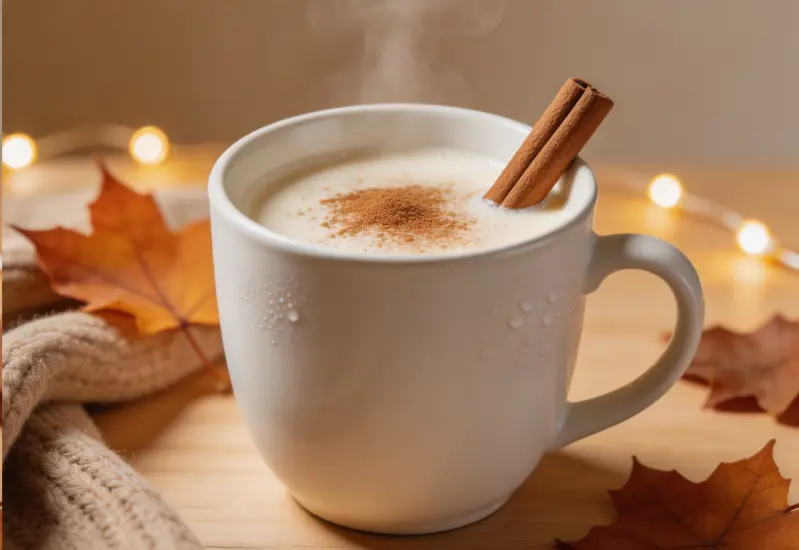
1 cup rolled oats, 1 cup milk or plant milk, 1/2 teaspoon ground cinnamon, a little honey, a few goji berries (how to eat red dates (jujube)).
Simmer oats in milk over low heat until creamy; stir in the cinnamon just before taking it off the heat.
Top with honey and goji berries. Best warm on a cold morning or before bed if your hands run cold.
Who Should Eat Less or Avoid It
- People with yin deficiency and internal heat: dry mouth, warm palms and soles, frequent signs of "heat" — cinnamon adds fuel to the fire.
- Pregnant women: high doses may stimulate uterine contractions; a little seasoning is fine, but avoid large amounts.
- People with liver disease: especially avoid long-term large doses of cassia (coumarin affects the liver).
- Those on blood thinners, diabetes drugs, or liver-metabolized medications: consult a doctor first.
- People allergic to cinnamon (mouth irritation, rashes).
Medication Interactions
Cinnamon may strengthen the effect of diabetes medication (risk of low blood sugar), add to the bleeding risk of anticoagulants (e.g. warfarin), and affect liver enzyme activity. If you take regular medication, ask a doctor or pharmacist before supplementing.
FAQ
There is some support, but the effect is moderate and it cannot replace diabetes medication. Treat it as a dietary aid, choosing the right type and dose.
Mostly cassia. Read the label: Cinnamomum cassia is cassia; Cinnamomum verum is Ceylon.
1–3 g daily as seasoning is fine. For long-term higher doses, choose Ceylon and stay within about 3 g.
In TCM cinnamon warms and supports yang, targeting cold-deficiency conditions — not the usual herb for a common cold. Follow medical advice.
No. Essential oil is highly concentrated, must not be taken internally, and needs dilution even for topical use.
A Note from Bong

Cinnamon probably has the wildest reputation swings in the spice rack. A few years ago it was the superfood — sprinkle a little and fix your blood sugar. Lately some call it a liver-damaging menace. The truth sits in between: it is a spice and a medicine used for over a thousand years, with real abilities and real limits.
While writing this, I went and checked the EU's daily limit for coumarin. The conclusion: if you plan to down cassia by the spoonful as a daily supplement, it is genuinely not worth it. But a pinch in your coffee and oats in winter is just a warmer way of living. Don't mythologize it, don't condemn it. Kitchen matters belong in the kitchen.
Stay warm this winter.
References
- Deyno S, et al. Efficacy and safety of cinnamon in type 2 diabetes mellitus and prediabetes patients: A meta-analysis of randomized controlled trials. Complementary Therapies in Medicine, 2019. View on PubMed
- Ranasinghe P, et al. Medicinal properties of 'true' cinnamon (Cinnamomum zeylanicum): A systematic review. BMC Complementary and Alternative Medicine, 2012. View on PubMed
- European Food Safety Authority (EFSA). Coumarin in flavourings and other food ingredients with flavouring properties. EFSA Journal, 2008. View on EFSA
Not Sure What Constitution You Have?
Spend a few minutes finding out whether you run cold or hot, yang- or yin-leaning, before deciding if cinnamon suits you.
Start the Test